
Repertoire
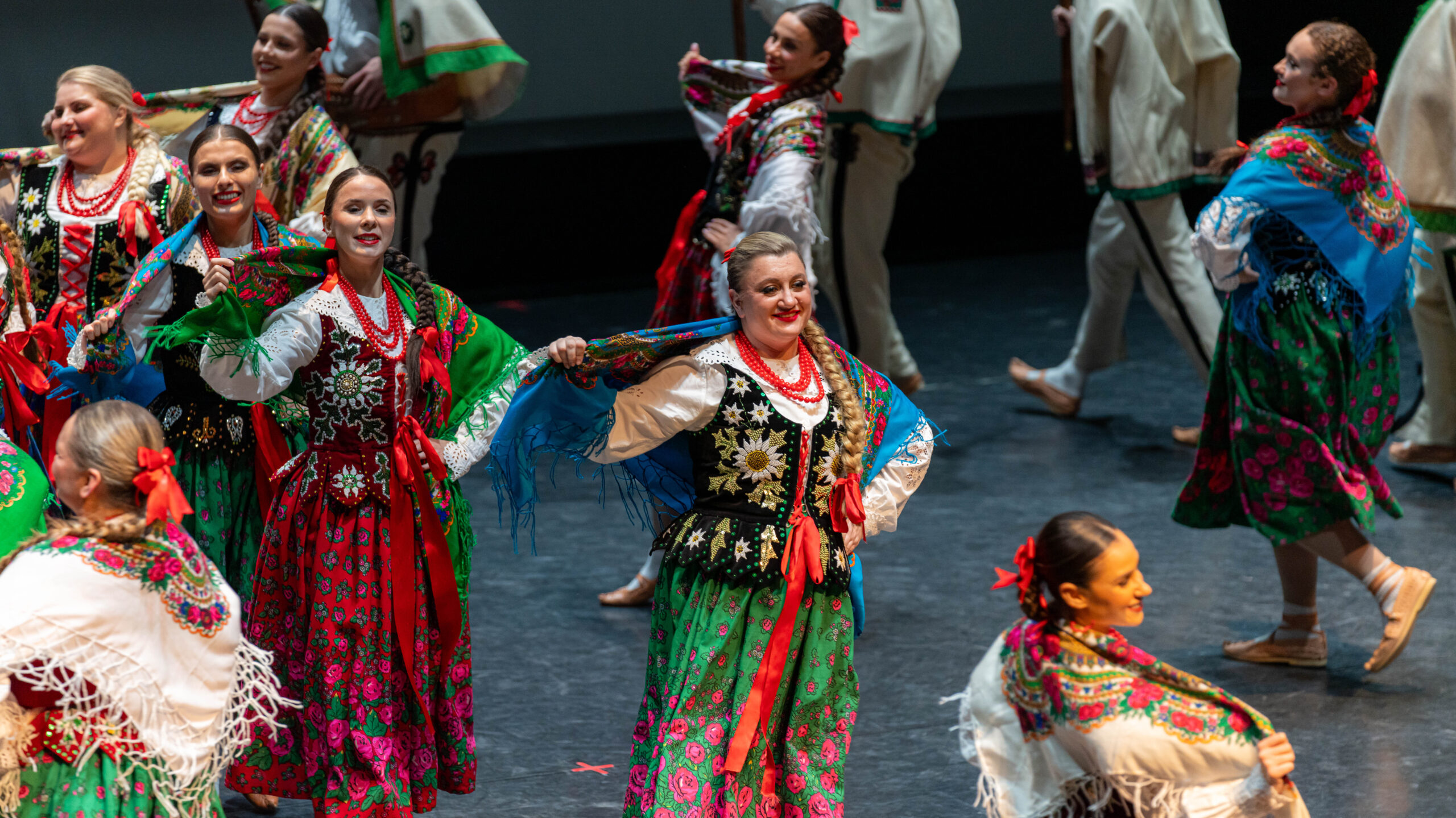
Góralski
Choreography By: Sandro Barbosa
The elements of the Polish highland dances are echoed in the music composed by Stanislaw Moniuszko in his opera “Halka”. Highlander culture is distinctive as it is rich in its architecture, music, and painting. The colourful costumes are highly original, reflecting the unique environment in which they were created.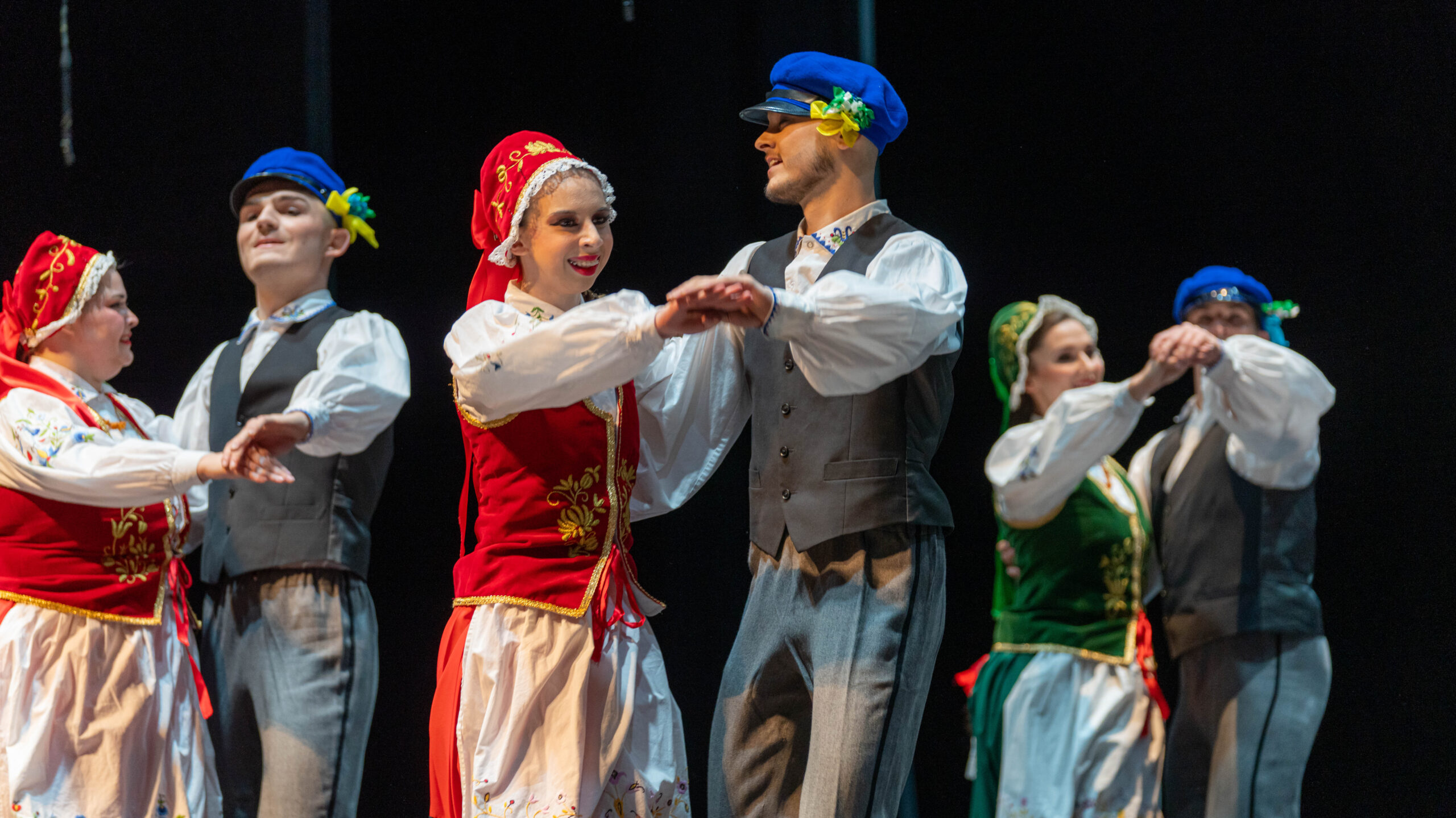
Kaszuby
Choreography By: Krysia Kovach, Robert Langtry
The Kaszuby dances are from the Baltic area of Poland and are mostly gentle, joyful, and graceful. Although they have many characteristic traits of the dances from the neighbouring regions, they also reveal obvious Swedish and German influences both in music and in the steps. They can be divided into dances of the rural population and of people of the sea.
Koziery
Choreography By: Magda Jhagru, Bernard Pacak
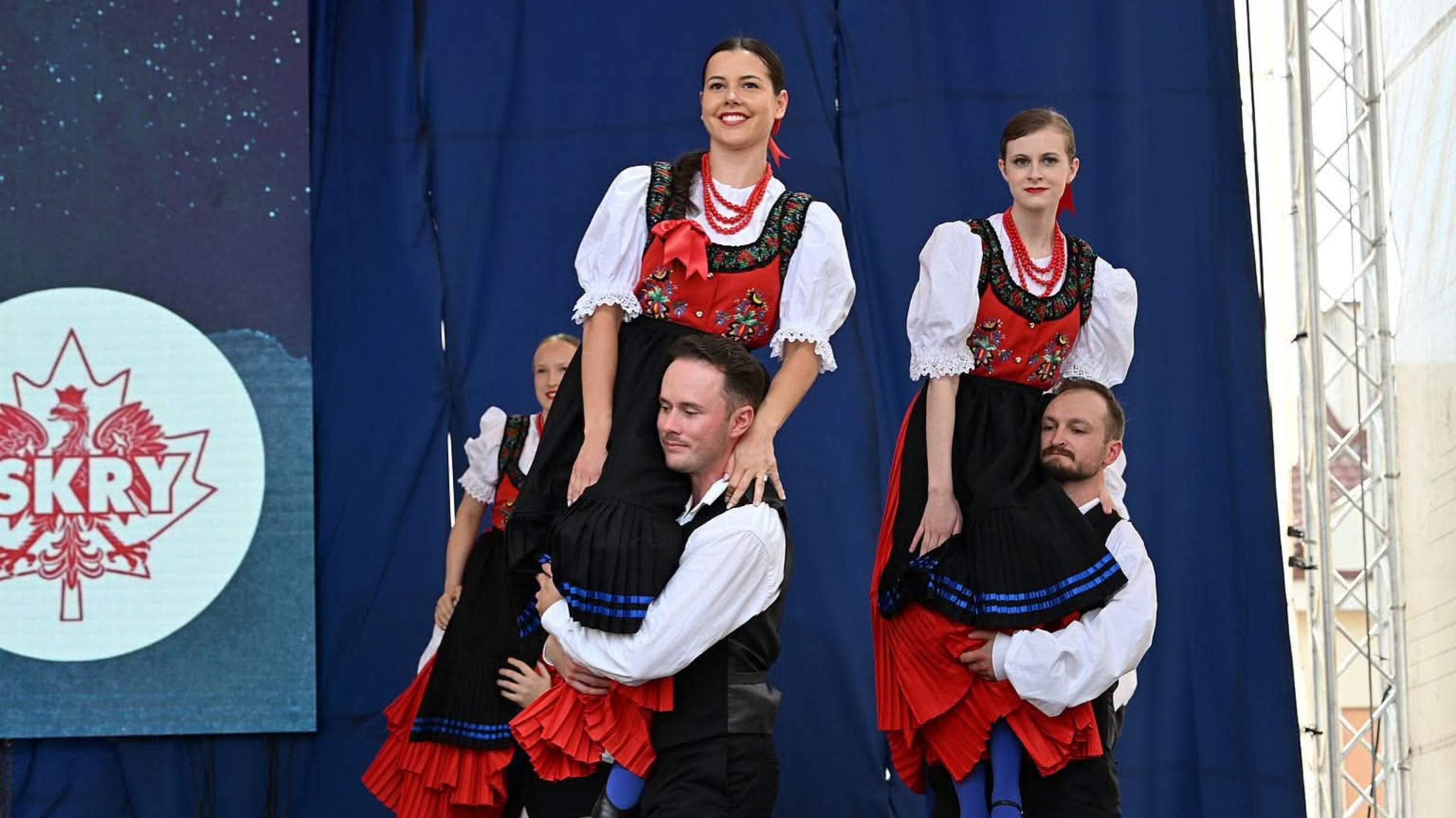
From the Opole region of Upper Silesia, this romantic and melodic dance is filled with graceful partner work and impressive lifts. The women’s red dresses flare like giant bells against the gentlemen’s simple black and white attire.
Krakowiak
Choreography By: Magda Jhagru, Bernard Pacak
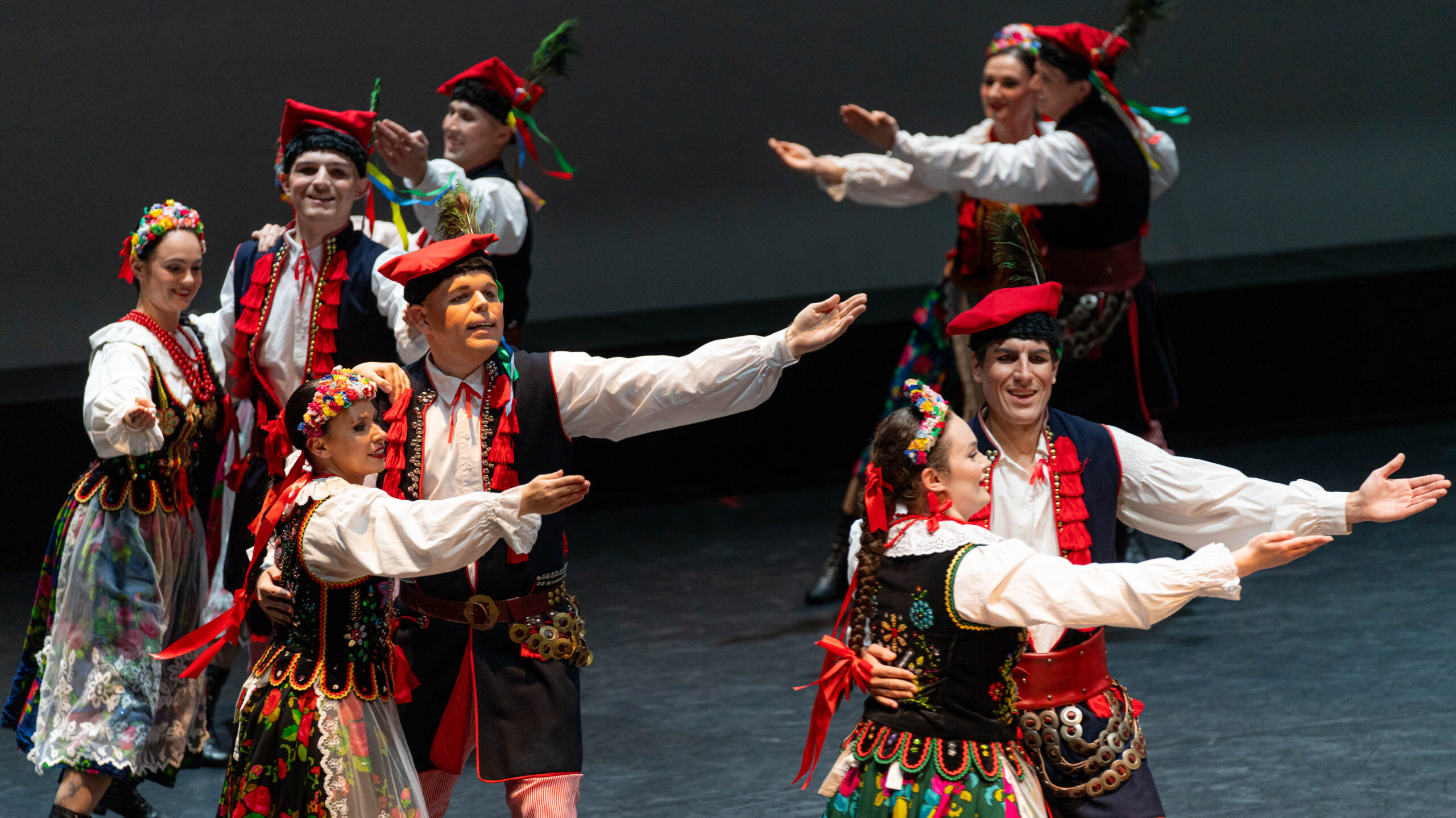
Krakowiak is one of Poland’s 5 national dances. The dance comes from the old capital city of Poland, Krakow, which is a vibrant centre of rich folklore, historic traditions, and the arts. It is one of the most popular and characteristic Polish folk dances with very lively, and long, easy strides demonstrating spirited abandon and elegance at the same time.
Lachy Sądeckie
Choreography By: Krysia Kovach, Robert Langtry
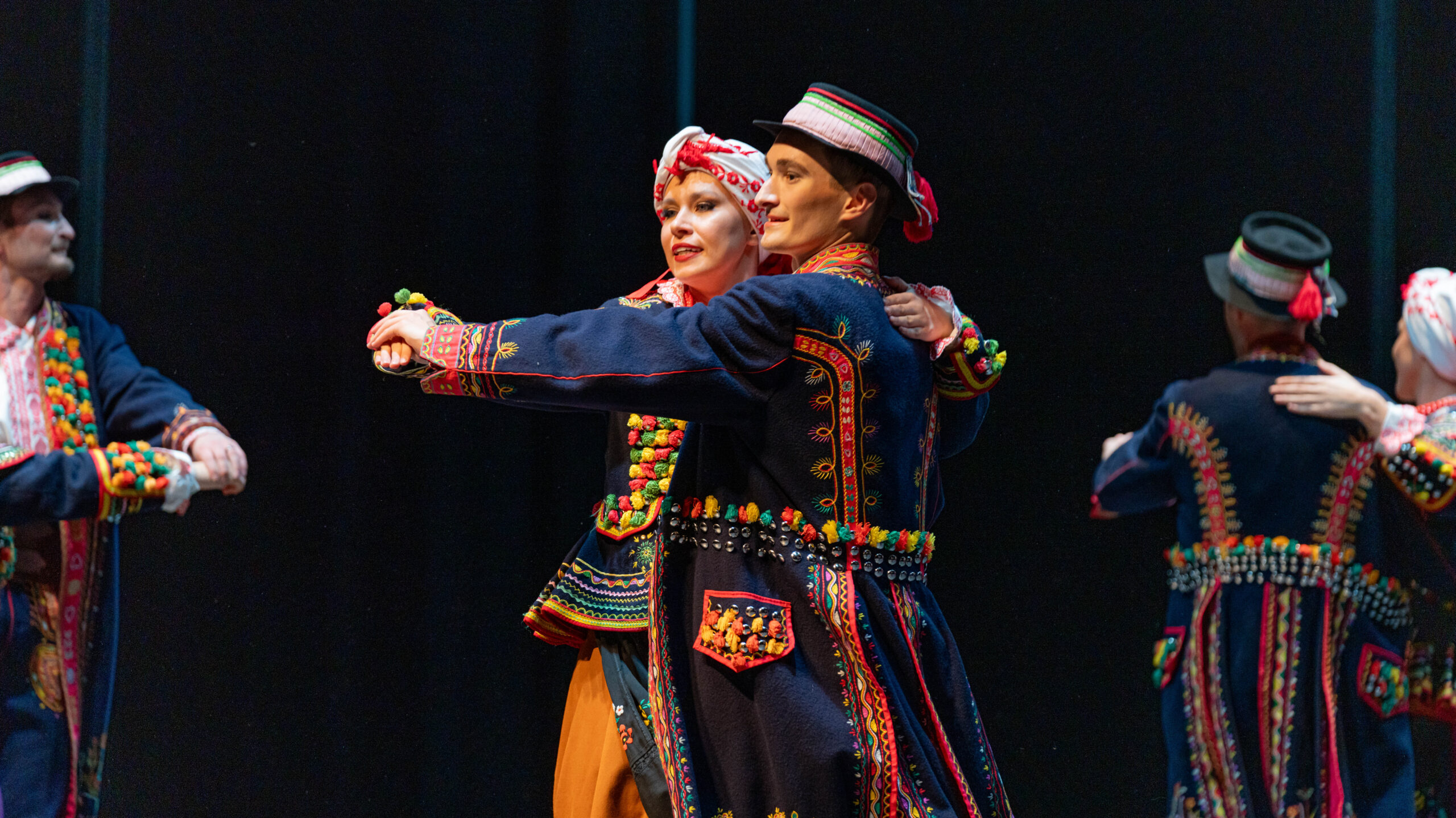
The ethnographic region of Sacz lies in a valley of three mountain rivers in the southern part of Poland. The dances of the Sacz Lachy region are mainly turning polkas done in a variety of ways with various additional elements like stamping, squatting, and lifting one leg. Dancing is interlaced with singing and enhanced with characteristic shouting and whistling.
Łowicz
Choreography By: Sandro Barbosa
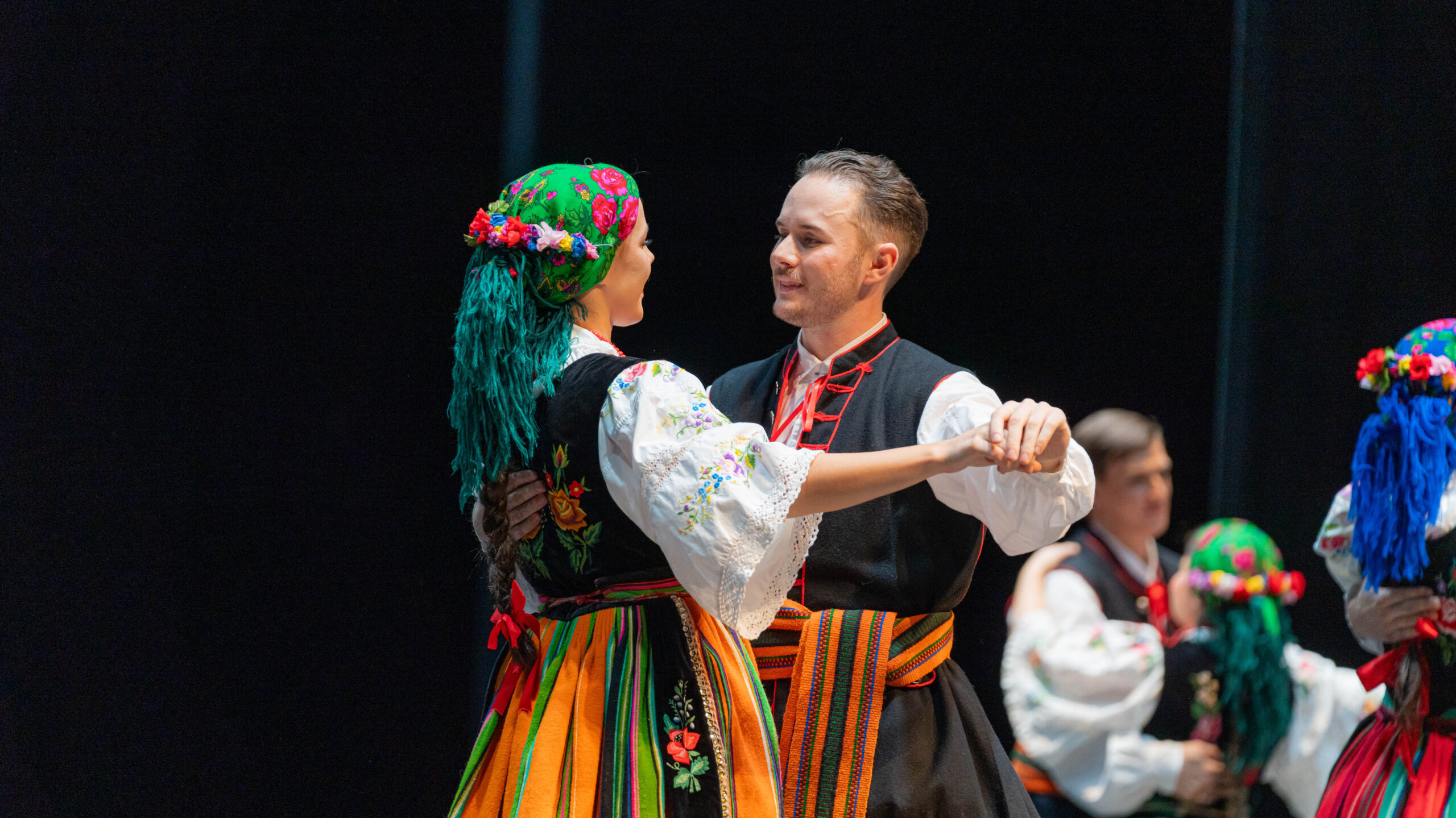
This is a very popular dance from the Mazowsze region because of its beautiful medleys of songs and dances. The elegant and uniquely embroidered costumes depict the region’s rich landscape filled with beautiful plains and luscious forests.
Opoczno
Choreography By: Magda Jhagru, Bernard Pacak, Justyna Paprocki
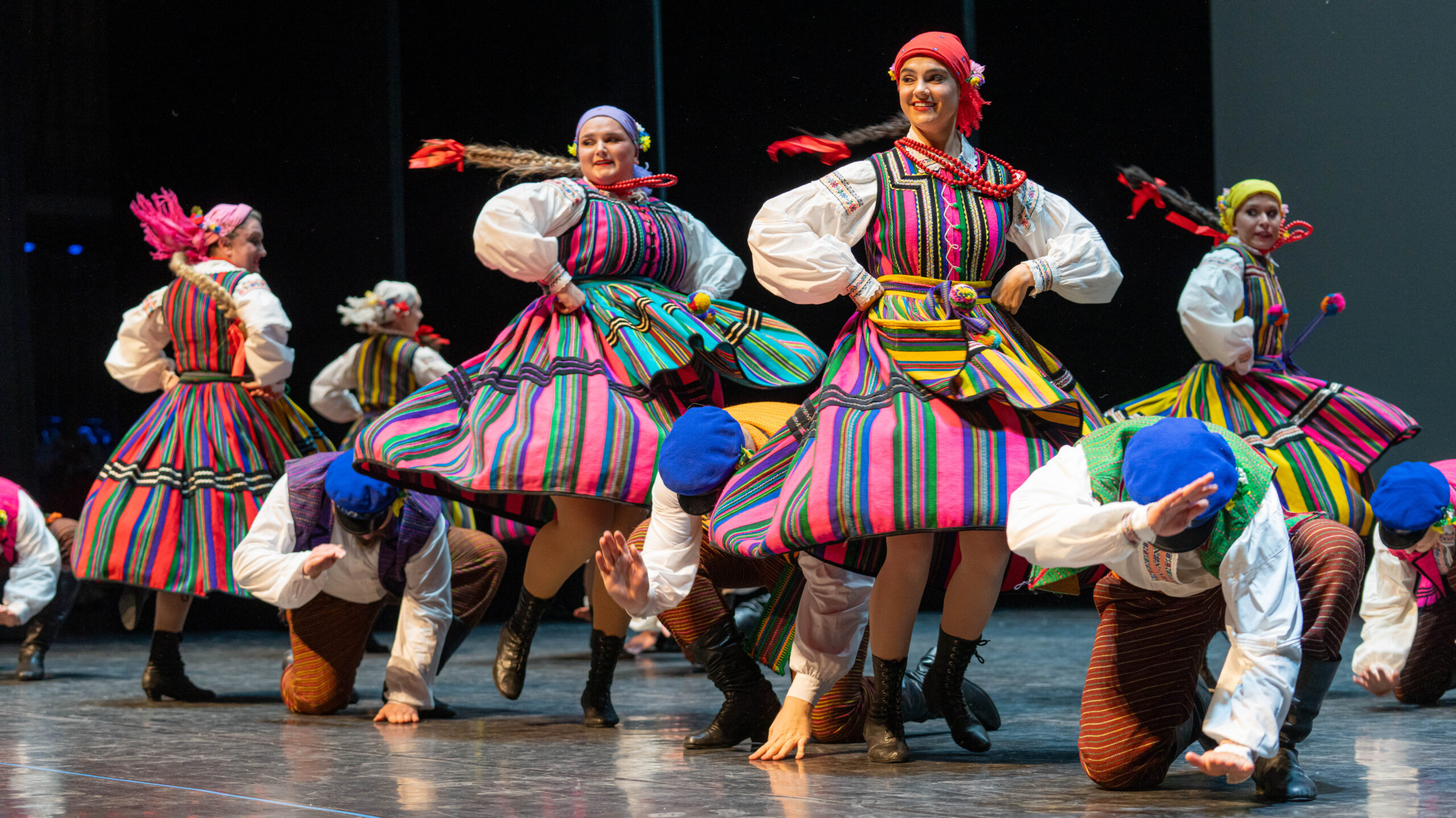
From the central region of Poland, this dance is very lively and joyful filled with energetic obereks and spins. The vast wool supply in the area gave way for producing the distinguishing colorfully striped fabrics which were used in making
the traditional costumes.
Polka Warszawska
Choreography By: Magda Jhagru, Bernard Pacak, Justyna Paprocki
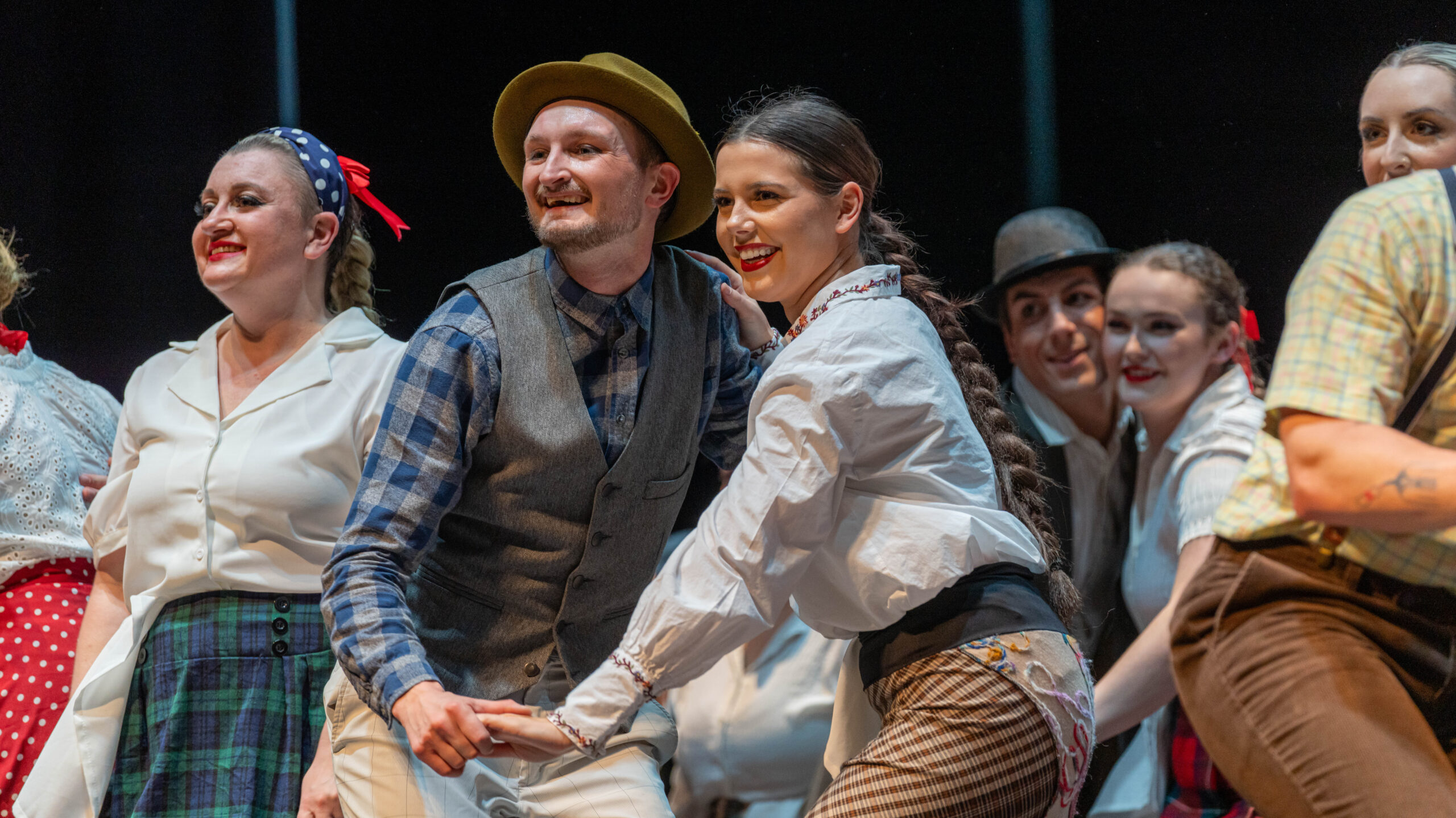
A romantic tango in which the gentlemen are lured on stage by a riveting vocalist. With so many lovely ladies on stage, the gentlemen are lucky enough to dance with not one, but two beauties. All dancers join after for the Polka Warszawska which consists of lively and fun foolery on stage.
Spisz
Choreography By: Krysia Kovach, Robert Langtry
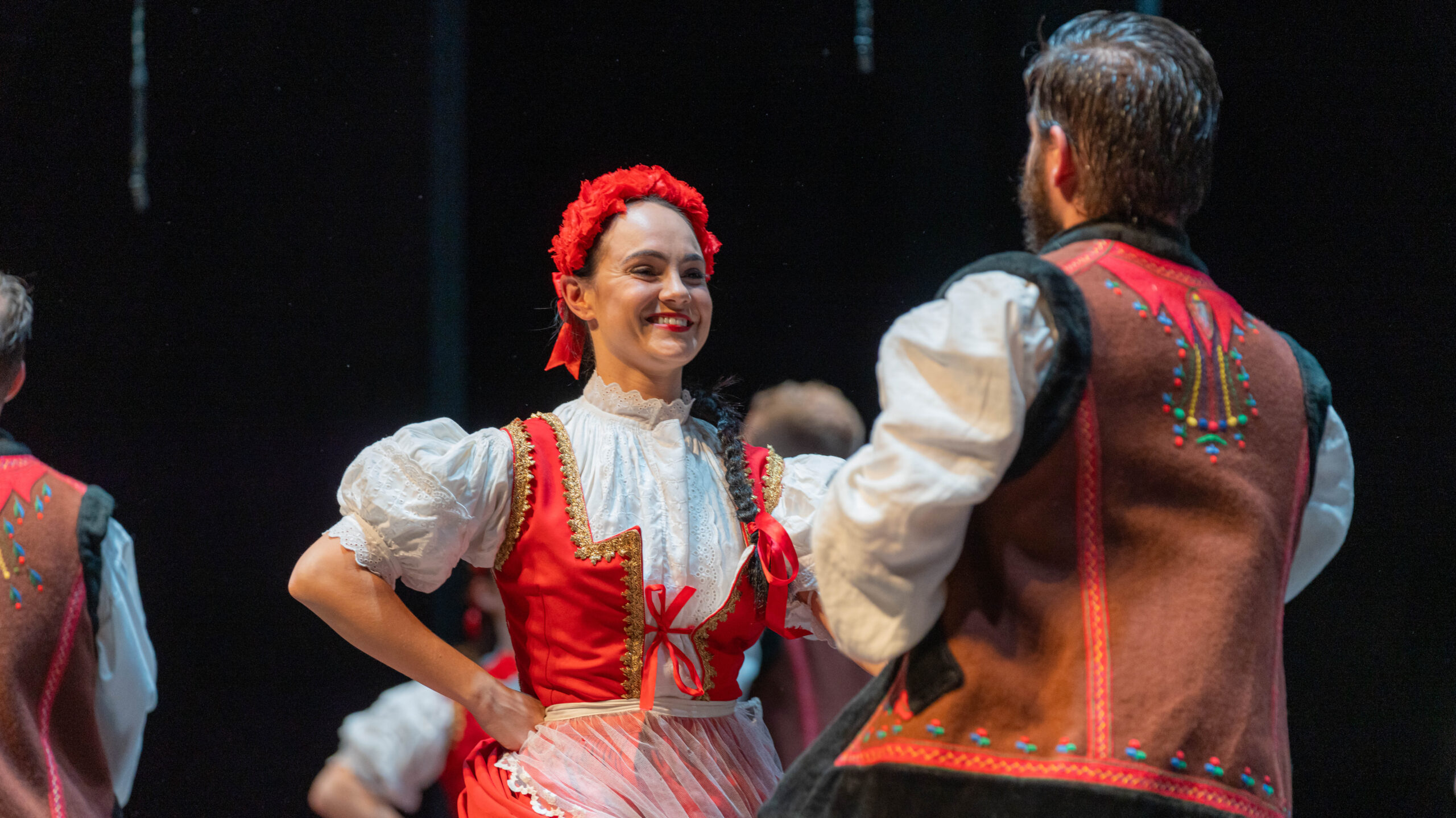
The small region of Spisz is located in south-eastern Poland between the Dunajec River and the Tatry Mountains. This region shares its border with Slovakia but was part of the old Kingdom of Hungary at one time. Its unique folk culture has been created mainly by the mixture of Polish, Hungarian, and German settlers, Wallachian shepherds and Slovak folklore.

Warmia
Choreography By: Magda Jhagru, Bernard Pacak, Monika Niemczyk
From the northern region of Poland, this dance was very popular with fishermen and sailors. The playful aspects of this region included such dances as żabka (frog) in which the gentlemen imitate the animal jumping. The elegant women show no interest in the silly misbehaving gentlemen until they realize how well they dance.